
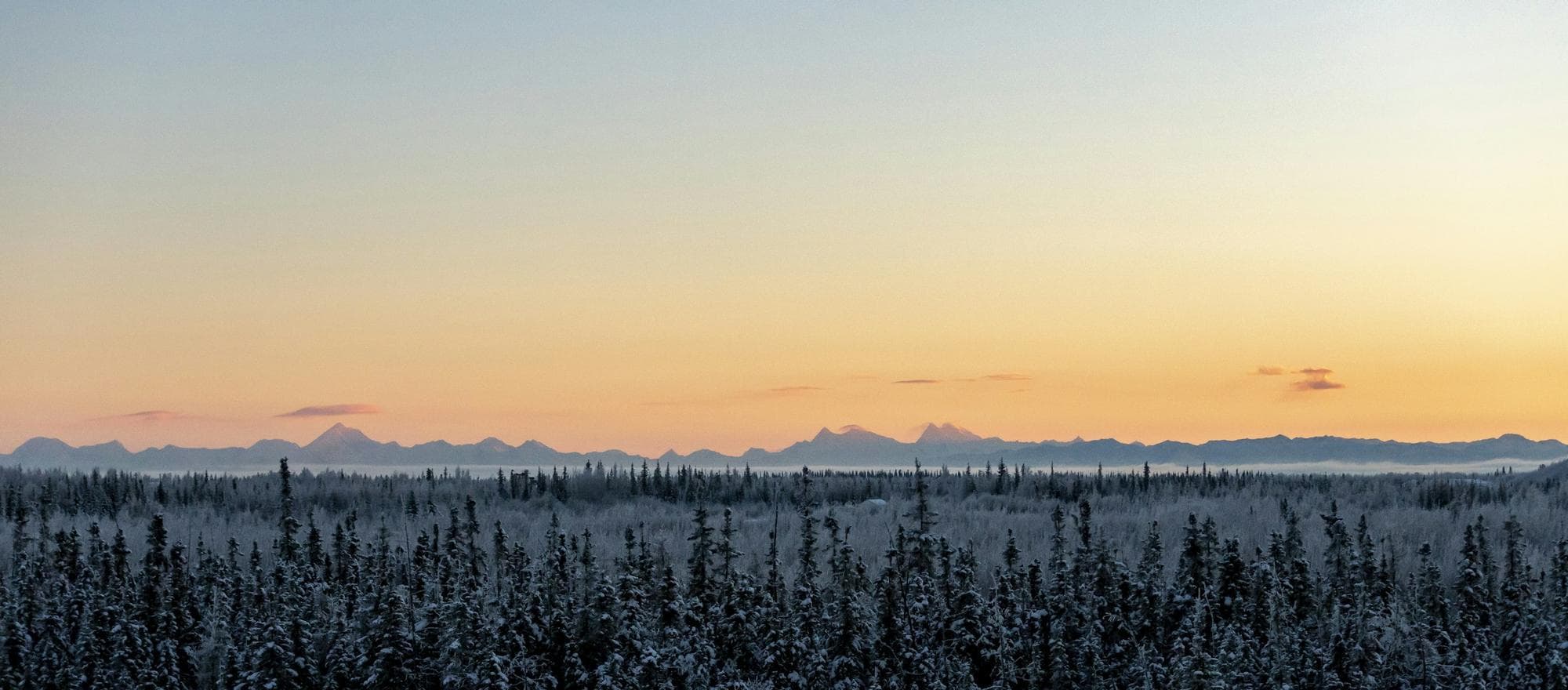
Excavation and Site Work in Homer, Alaska
Driveways, house pads, septic systems and drainage work in Homer and the hills above Kachemak Bay, from an owner-operated contractor based in Soldotna.
Zoning permit before clearing
Homer issues no building permits. Inside city limits, a city zoning permit is still required before clearing or new construction.
1,000 cubic yards
In Homer's Level One districts, moving 1,000 cubic yards or more of material triggers an engineer stamped stormwater plan.
40 or 60 feet from the bluff
City code sets structures 40 feet back from the coastal edge along most of Homer and 60 feet back in the western part of town.
Wells are a long shot
The city calls Homer groundwater generally unsuitable for wells, so many owners off city water buy hauled water and store it in a holding tank.
MNA Construction does excavation, septic, driveway and site prep work in Homer, about 80 miles down the Sterling Highway from our base in Soldotna. Homer has its own permit rules, its own bluff rules, and ground the city itself describes as silty and slow to drain. Each of those changes how a Homer job gets planned and what it costs.
Who issues permits in Homer
The City of Homer does not have a building code or a building inspector, and it does not issue building permits. It does require a zoning permit before clearing or new construction, including additions. That means you need the permit before the first tree comes down on a lot inside city limits.
The city issues the zoning permit only after every other required permit is in hand, and review can take up to 10 working days after a complete application. Driveway permits and water and sewer connection permits come from Homer Public Works. The Planning Office is at 907-235-3106.
Outside city limits, on Diamond Ridge, in Fritz Creek, and out East End Road, the city zoning permit does not apply. The Kenai Peninsula Borough rules do: a driveway permit where you tie into a borough road, and the 50-foot habitat setback on salmon streams. Access onto the Sterling Highway itself goes through the state DOT&PF.
Filling wetlands needs an Army Corps of Engineers permit, in town or out. For the 2026 season the city has warned that Corps wetland reviews are taking several weeks to a month or more. If your lot might be wet, check before you plan the pad and start that permit first.
Stormwater plans and drainage rules
Homer requires a stormwater plan when a project crosses certain thresholds in the city's site development standards. In the Level One zoning districts, any one of these triggers it:
- More than 25,000 square feet of new impervious surface (hard surfaces such as roofs and pavement) on a lot
- Total impervious surface on the lot passing one acre
- Grading, excavation, or filling that moves 1,000 cubic yards or more in total
- A permanent cut or fill slope of 3:1 or steeper that is more than 10 feet tall
Level Two districts use a different list, which includes any clearing or grading on a slope steeper than 25 percent or within 10 feet of a wetland, watercourse, or water body. The plan must be stamped by an Alaska registered civil engineer, and the city lists a $200 fee and about two weeks of review on its storm water plan page.
City staff have said most single family construction does not need a stormwater plan, but a big lot can get there. Stripping 1.5 feet of organics off a 400 foot driveway that is 16 feet wide moves about 356 cubic yards. Placing 2 feet of gravel back on it adds about 474 more. Add a house pad and you are close.
Drainage is the bigger everyday issue. A city utility report describes Homer soils as silty and relatively impermeable, with a perched water table (groundwater held up near the surface by a tight layer below) and generally poor drainage. The same report found illegal storm drain connections to the sanitary sewer. Sump pumps, roof drains, and foundation drains do not go into city sewer. Plan where that water goes with ditches, swales, culverts, or a drain line that daylights downhill. Our drainage fixes guide covers the options.
Bluffs, slopes and setbacks
Homer's slope chapter (HCC 21.44) applies to clearing, grading, excavating, and filling on lots with an average slope of 15 percent or more, on bluffs and ravines, and within 40 feet of the top or 15 feet of the toe of a slope. On lots averaging 15 to 30 percent slope, the developed area is capped at 25 percent of the lot unless the City Engineer approves a site plan. Between 30 and 45 percent, the cap is 10 percent.
The code also requires grading that sends water away from structures for at least 10 feet, especially where a pad is cut into a hillside. If slope work is not stabilized by October 15, erosion control blankets go down and stay until at least the following May.
On the coastal bluff, structures must sit 40 feet back from the coastal edge along most of the city and 60 feet back in the western part of town, and at least 15 feet from the toe. A smaller setback takes an engineer's recommendation, City Engineer acceptance, and a conditional use permit.
A 2022 state geological survey study found Homer's coastal bluffs have retreated about one foot per year on average since 1951. It names drainage as one of the main signs of bluff instability, and notes coal beds in the bluff that hold water up and cause seeps. Never send driveway runoff or a foundation drain over the bluff edge.
Septic, wells and city water
City water comes from the Bridge Creek Reservoir. A 2017 city estimate put about 74 percent of occupied homes on piped water and 61 percent on piped sewer. If a main runs past your lot, Public Works permits and inspects the connection, and MNA can dig and lay the service line; see utility installation.
Off the city system, plan carefully. The city says groundwater in Homer is generally unsuitable for wells because of low yields, shallow groundwater, no significant freshwater aquifer, and saltwater in wells. Many owners buy hauled water and store it in a holding tank instead.
The same city report calls Homer's poor perking soils and perched water table "not ideal" for septic systems. State rules require 4 feet between the bottom of the drainfield and the seasonal high water table, and 6 feet to clay or another tight layer. Get a soils test before you design anything, and read our septic installation guide for the approval path. Our septic systems page covers the installation work MNA does.
Getting equipment to Homer
Every Homer job starts with mobilization (moving equipment to the site and back), a round trip of roughly 160 miles to bring an excavator, a loader, or a dozer down from Soldotna. That trip costs the same for a half day of work as for two weeks, so bundle the clearing, driveway, pad, septic, and utility trench into one mobilization. Read how to read an excavation estimate to see where mobilization shows up.
If you have a Homer lot to clear, a driveway to build, or a septic system to install, request a free estimate or call (907) 953-4048.
Homer questions we hear
- Do I need a building permit to build a house in Homer?
- No. The City of Homer does not issue building permits or inspect construction. Inside city limits you need a city zoning permit before you clear or build, plus Public Works permits for a driveway or a water and sewer connection. Outside city limits, borough rules apply.
- Do I need a permit to clear my lot in Homer?
- Inside city limits, yes. The city requires a zoning permit before clearing, and starting work without it is a code violation. Clearing in wetlands also needs an Army Corps of Engineers permit, and bigger grading jobs can trigger a stormwater plan.
- How close to the bluff can I build in Homer?
- City code requires structures to sit 40 feet back from the coastal edge along most of Homer and 60 feet back in the western part of town, and at least 15 feet from the toe of the bluff. A smaller setback takes an engineer's recommendation and a conditional use permit. Confirm your lot with the Planning Office.
- Can I put a septic system on my Homer lot?
- Often, but the city itself calls Homer's soils and perched groundwater not ideal for septic systems. State rules require 4 feet of separation to the seasonal high water table and 6 feet to clay or another tight layer. A soils test tells you what will work before you buy or design.
- Does it cost more to have MNA work in Homer?
- The haul from Soldotna is a real cost on any Homer job, and it weighs most on small jobs. Bundling several tasks into one trip spreads it out. Ask us to show mobilization as its own line on your estimate so you can see it.
Services in Homer
- Excavation & Earthwork
- Site Preparation
- Grading & Land Clearing
- Utility Installation
- Septic System Installation
- Road & Driveway Construction
- Foundation Work
- Demolition
- Snow Removal & Winter Services
Free estimates for Homer property owners. Tell us what you're planning.
Request an Estimate(907) 953-4048