
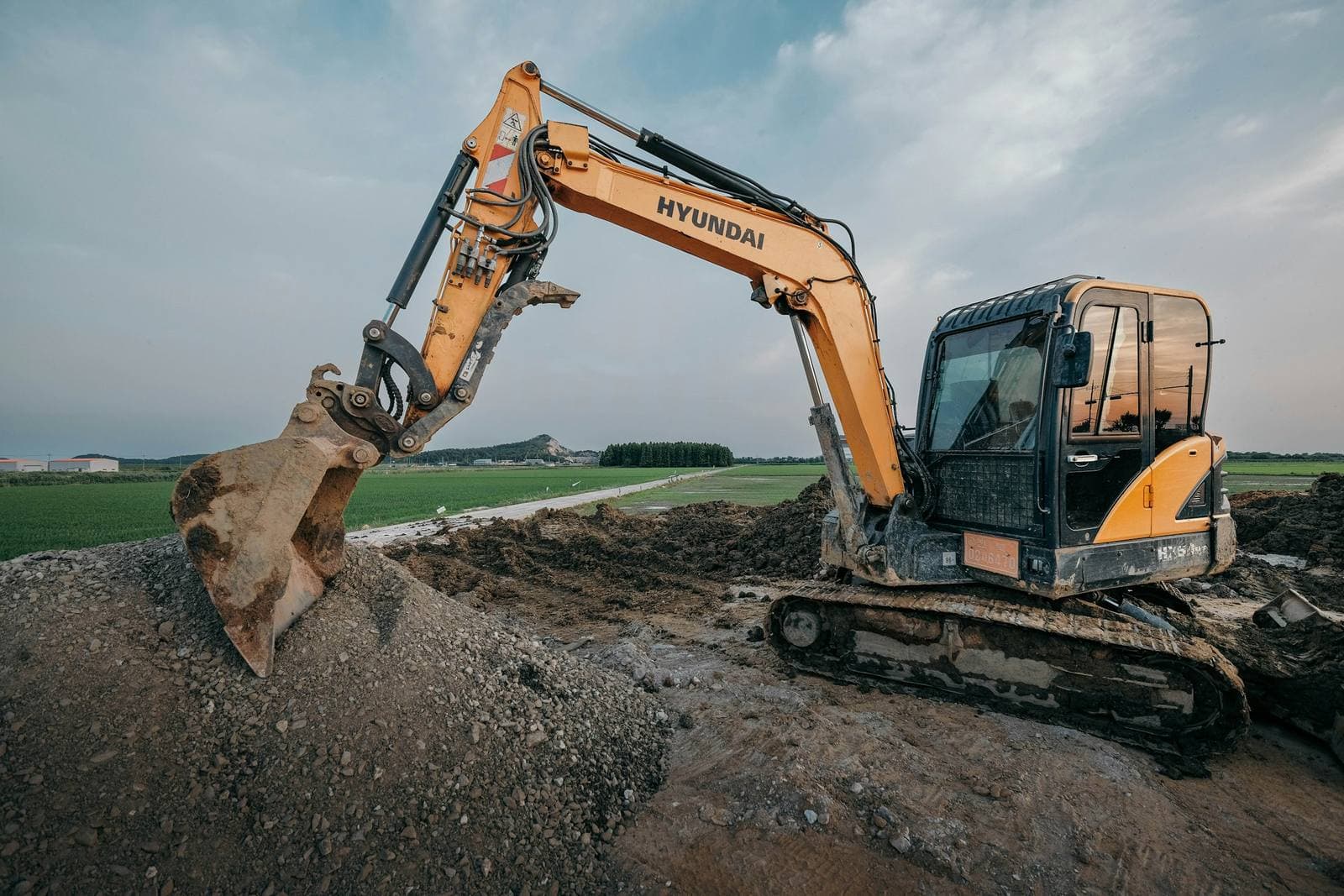
Excavation & Earthwork
Large-scale excavation, cut and fill operations, and mass earthmoving for projects of any size across the Kenai Peninsula.
MNA Construction brings modern equipment and experienced operators to every excavation project across Southcentral Alaska. The work runs from residential basement digs to commercial site excavation, from precise cuts to bulk earthmoving. We understand the unique soil conditions of Southcentral Alaska, including glacial till, volcanic ash layers, and high water tables, and plan every job accordingly.
Our cut-and-fill operations are engineered for Alaska's challenging terrain. On a hillside lot in Homer or a commercial pad in Soldotna, we balance cut against fill so less material gets hauled in or out, which is where site work budgets are won or lost. Where a project has an engineer, we build to their plan for frost heave and seasonal ground conditions.
Safety and environmental compliance are built into every phase of our earthwork operations. We maintain current permits, follow Alaska Department of Environmental Conservation guidelines for erosion and sediment control, and take extra precautions around salmon-bearing waterways that the Kenai Peninsula depends on.
What excavation on the Kenai Peninsula involves
MNA Construction provides excavation services across the Kenai Peninsula, from a single basement in Soldotna to bulk earthmoving for a commercial pad. The digging itself is the simple part. What makes or breaks the job is what is in the ground.
Kenai Peninsula lots change a lot over short distances. Low ground often has a layer of peat or organic mat on top that cannot stay under anything you build. Below that you may hit clean sand and gravel, tight silt, or glacial till full of cobbles and boulders. In spring, a high water table can put water in the bottom of a hole that was dry in August.
That is why we want to know what you are building before we quote. A basement, a house pad, a pond, and a utility trench all handle the same ground differently.
What to have ready before we dig
A few things on your side keep an excavation job on schedule:
- Property corners and a survey. We dig where the stakes say. If the house position is close to a setback, have it staked by a surveyor.
- Plans with elevations. Footprint, depth, and finished floor height tell us how much comes out and how much goes back.
- Private line locations. We place the 811 locate request, because Alaska law puts that on the person doing the digging. Utility locators only mark their own lines, so wells, private water lines, and power run to outbuildings are on you to point out. See calling 811 before you dig.
- Setbacks and wet ground. Work within 50 feet of a protected salmon stream falls under the borough's habitat protection rules, and placing fill in wetlands can need a federal permit. Check whether your lot is wetlands before the machine arrives.
Cut, fill, and mass excavation: how the quantities work
Excavation is priced on volume, so it helps to know how the math goes. A basement 30 feet by 40 feet dug 8 feet deep is 9,600 cubic feet, which is about 356 cubic yards (divide cubic feet by 27). Add working room around the walls and the real number is higher.
Soil also takes up more room once it is dug, so the truck count to haul it off is higher than the hole volume suggests. The cheapest yard of dirt is the one that never leaves the site. Where the plan allows, we balance cut and fill on the property: dirt from the high side builds up the low side.
Mass excavation is the same idea at a bigger scale: bulk earthmoving for large pads, ponds, and commercial sites, where the job is planned around total volume, haul routes, and where the material ends up. Peat and organics cannot be used as structural fill, so they get stockpiled for landscaping, spread in non-building areas, or hauled.
What drives the price of an excavation job
MNA prices each excavation job from its own quantities. These are the drivers we look at:
- Volume of cut and fill, and whether the spoils stay on site
- Ground conditions: depth of peat, boulders, and groundwater
- Imported material, such as gravel or structural fill, and the haul distance from the pit
- Access and clearing needed to get equipment in
- Season. Frozen ground digs slower, and spring load limits on soft roads can hold up gravel trucks during breakup.
Our post on what site work costs in Southcentral Alaska covers these in more depth, and how to read an excavation estimate shows what a good bid should spell out.
What's included
- Mass excavation and bulk earthmoving up to 50,000+ cubic yards
- Precision cut-and-fill balancing to reduce material costs
- Frost-depth excavation for Alaska foundation requirements
- Rock excavation and boulder removal
- Pond and retention basin construction
- Erosion and sediment control near salmon-bearing streams
Need a quote for this service?
Request an EstimateHow a job runs with us
- 1
Call with the basics
Tell us where the lot is, what you are building, and what plans or survey you have. A sketch with dimensions is enough to start.
- 2
Site visit
We look at the ground, access, drainage, and where spoils can go. If soil conditions are unknown, we talk about test holes before committing to a number.
- 3
Written estimate
The free estimate lists the scope, the estimated quantities of cut, fill, and imported material, and what is excluded, such as surveying, engineering, or rock beyond what we expect.
- 4
Locates and scheduling
We place the 811 locate request and schedule around your other trades, the weather, and road conditions.
- 5
Excavation and cleanup
We dig to the plan, place and compact fill in lifts, deal with spoils as agreed, and leave the site graded and ready for the next step.
Common questions
- How much does excavation cost per cubic yard in Alaska?
- There is no single per yard price, because the same yard costs more to dig in wet peat than in dry gravel, and more again if it has to be hauled off. Ask any contractor for the quantities behind their number. MNA's free estimates list the scope and the estimated volumes so you can see where the money goes.
- What is mass excavation?
- Mass excavation is bulk earthmoving: removing or moving large volumes of soil for big building pads, ponds, or commercial sites. The work is planned around total volume, where cut material can be reused as fill, and haul distance for what has to leave the site.
- Do I need a permit to excavate on my property on the Kenai Peninsula?
- It depends on where and what. A driveway approach onto a borough road needs a borough permit, work within 50 feet of a protected salmon stream falls under the borough's habitat rules, and fill in wetlands can need a federal permit. Inside city limits, ask the city. Call before you dig, not after.
- Who has to call 811 before digging in Alaska?
- Alaska law puts the locate request on the person actually doing the digging, at least two and no more than 15 working days before work starts. When you hire MNA, we make that call. Private lines you installed yourself are not marked by the utilities, so tell us where they are.
- Can you excavate in the winter?
- Often yes, but frozen ground digs slower, which costs more, and some work, like placing fill, needs ground that is not frozen. Our post on winter construction in Alaska covers what works in winter and what should wait for summer.