
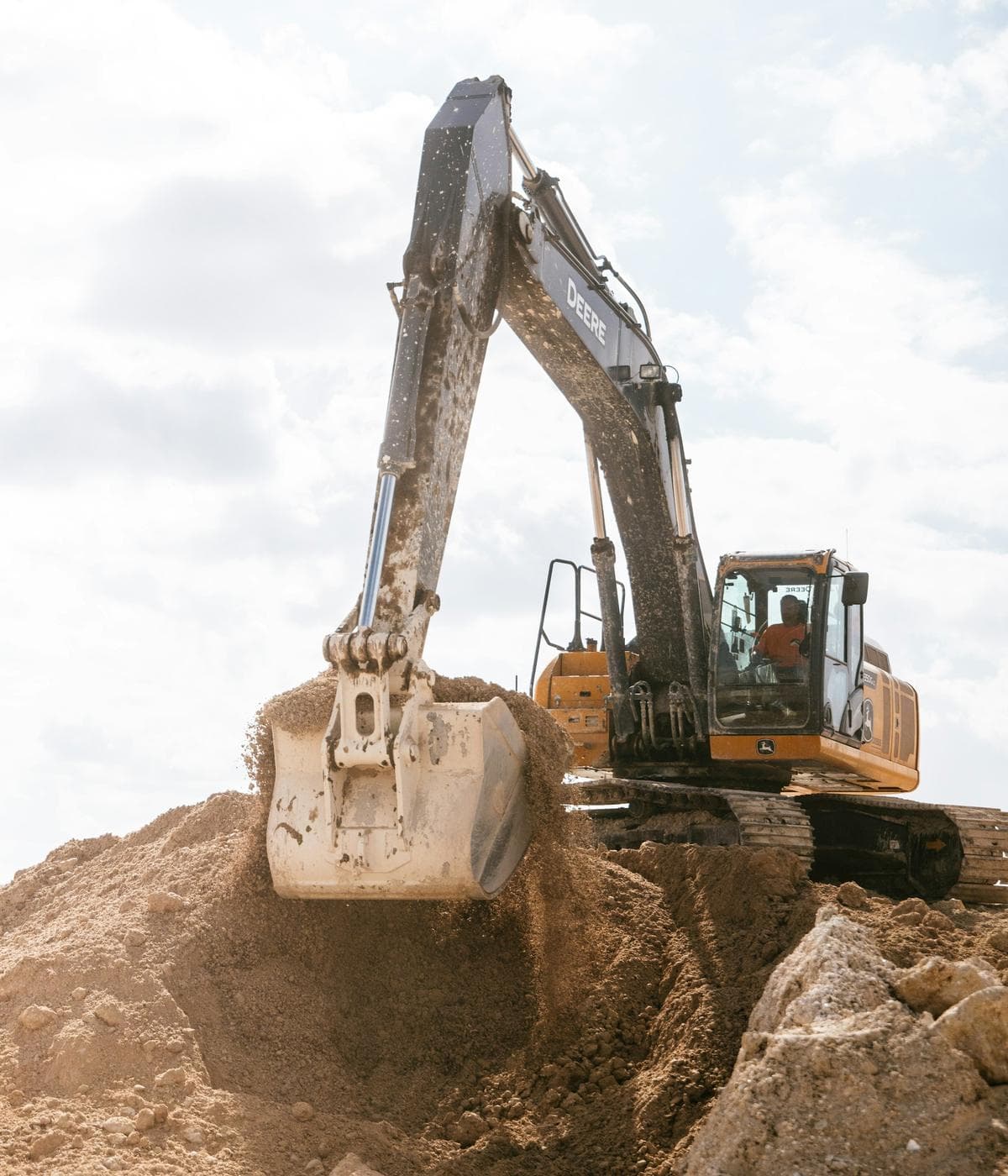
Grading & Land Clearing
Precision finish grading, lot clearing, and vegetation removal for residential and commercial properties.
Finish grading is where a raw construction site becomes a buildable property, and in Alaska it decides where breakup water goes. Our grading crews use GPS-guided equipment to achieve precise elevations and slopes, ensuring proper drainage away from structures and compliance with engineered site plans. We handle everything from single residential lots to large subdivision developments across the Kenai Peninsula Borough.
Land clearing in Alaska presents challenges you won't find in the Lower 48. Dense stands of black spruce, birch, and alder, often growing in muskeg or wet ground, require careful removal techniques. We selectively clear when possible, preserving mature trees for windbreaks and aesthetics while removing vegetation from the building envelope. All cleared material is processed responsibly, with merchantable timber separated and slash either chipped or disposed of according to local burn regulations.
Our grading services extend beyond initial construction. We also help property owners regrade for better drainage, build pads for new outbuildings and shops, and restore ground disturbed by earlier construction. Proper grading is your first line of defense against the water management challenges that come with Alaska's freeze-thaw cycles and spring breakup season.
Land clearing on the Kenai: trees, stumps, and slash
MNA Construction is a land clearing contractor working across the Kenai Peninsula, from house sites in Sterling to acreage around Nikiski. Most lots here are spruce, birch, and alder, and many have standing spruce killed by spruce beetles.
Clearing and grubbing are two different steps. Clearing takes down the trees and brush. Grubbing pulls the stumps and roots out of the ground, which you need anywhere a building, driveway, or pad will sit. Leave roots under a pad and they rot and settle.
The decision that matters most is what happens to the material:
- Logs can be bucked for firewood or left for you.
- Brush can be burned on site with a permit, chipped, or hauled. Borough brush piles at the Central Peninsula Landfill and in Seward take brush cut to under 4 feet.
- Stumps are not accepted at borough solid waste facilities, so they have to be handled on the property or taken to a private site that takes them.
Burn permits, setbacks, and selective clearing
From April 1 to August 31, burning in Alaska requires a permit from the Division of Forestry. A small-scale permit covers a brush pile up to 10 feet across and 4 feet high. Land clearing piles bigger than that need a large-scale permit, which can require extra equipment and a site inspection. Permits can also be suspended when fire danger is high, so a burn plan needs a backup.
Near water, clearing has its own limits. Within 50 feet of a protected salmon stream or lake, removing trees and vegetation needs a borough habitat permit. See our post on the 50 foot setback for what is allowed.
You do not have to clear everything. Selective clearing keeps healthy trees for windbreak, privacy, and screening, and takes out dead spruce and brush close to buildings. For fire risk, our post on spruce beetle defensible space clearing covers what to remove first.
Grading and drainage
Grading shapes the ground so water goes where you want it. Finish grading is the last pass that sets the final slope around a building, a driveway, or a yard.
The basic rule is that ground should fall away from the foundation. The residential building code standard is a drop of at least 6 inches in the first 10 feet. Where the lot does not allow that, a swale (a shallow, shaped channel) carries the water around the building instead.
Drainage problems on the Kenai show up during spring breakup, when snowmelt hits ground that is still frozen underneath and the water has nowhere to soak in. If you have standing water every April, grading is usually the fix. Our post on standing water and yard drainage goes through the options, and preparing for breakup covers the short term steps.
How we price clearing and grading
MNA prices clearing and grading from what is on the ground. The drivers:
- Area and density. An acre of thick black spruce is more work than an acre of scattered birch.
- Tree size, and whether logs are kept, bucked, or hauled
- Stump handling, which is often the largest single item
- Burn, chip, or haul for the brush
- Selective clearing, which takes longer per acre than clearing everything
- Slope and access
- Topsoil and fill needed to finish grade
For rough numbers per acre and how to estimate your own job, see land clearing cost on the Kenai Peninsula.
What's included
- GPS-guided finish grading to engineered plans
- Selective land clearing preserving key vegetation
- Drainage grading and swale construction
- Building pad preparation and compaction
- Topsoil stripping, stockpiling, and respreading
- Post-construction site restoration and seeding
Need a quote for this service?
Request an EstimateHow a job runs with us
- 1
Call with the lot details
Tell us where the land is, roughly how much you want cleared or graded, and what it is for. Aerial photos or a plat help.
- 2
Site walk
We walk the area with you, flag trees you want to keep, and look at wet spots, slope, nearby water, and where the brush and stumps can go.
- 3
Written estimate
The free estimate lists the area to be cleared, how stumps and brush will be handled, grading limits, and exclusions such as permits, survey work, and seeding.
- 4
Scheduling
We schedule around burn season, ground conditions, and any permits for work near water.
- 5
Clearing, grading, and cleanup
We clear and grub, handle the material as agreed, grade to drain, and walk the finished area with you.
Common questions
- How much does land clearing cost per acre on the Kenai Peninsula?
- It varies widely with tree density, tree size, and what happens to the stumps and brush. Burning on site with a permit usually costs less than hauling, and stumps are often the biggest line item. MNA gives free written estimates after walking the site.
- Do I need a burn permit to burn brush piles in Alaska?
- Yes, from April 1 to August 31 you need a burn permit from the Alaska Division of Forestry. A small-scale permit covers piles up to 10 feet in diameter and 4 feet high. Bigger land clearing piles need a large-scale permit, and permits can be suspended when fire danger is high.
- What do you do with stumps after clearing?
- Kenai Peninsula Borough solid waste facilities do not accept stumps, so they have to be handled on the property or taken to a private site that will take them. We work out the plan for stumps before the clearing starts, because it affects the price.
- Can you clear part of a lot and keep the good trees?
- Yes. Selective clearing removes dead spruce, brush, and the trees in the way of the building, and leaves healthy trees for windbreak and privacy. We flag the keepers with you before the work starts.
- How should my yard be graded for drainage?
- Ground should slope away from the house, at least 6 inches of drop in the first 10 feet under the residential building code standard. Where that is not possible, a shallow swale carries water around the building. The goal is water leaving the site before breakup, not pooling against the foundation.